Mānuka honey: what the labels mean and how to buy it
Mānuka honey is one of New Zealand's best-known exports, and one of the most confusing things to buy. Jars side by side on a shelf can differ in price by ten times, with different numbers and logos on each. This guide explains what those labels mean so you can choose the right jar.
Quick facts
- Mānuka honey is made by bees from the flowers of the mānuka bush (Leptospermum scoparium), which grows across New Zealand.
- Since 2018, honey exported from New Zealand as "mānuka" must pass the Ministry for Primary Industries (MPI) science-based definition: tests for chemical markers and mānuka pollen DNA.
- Monofloral mānuka honey is mostly from mānuka flowers. Multifloral has mānuka mixed with other flowers. Monofloral costs more.
- UMF and MGO are two different grading scales. Higher numbers mean more methylglyoxal, the compound mānuka honey is valued for, and a higher price.
Where it comes from
The mānuka is a native shrub with small white or pink flowers. It flowers for only a few weeks each summer, often on remote hill country, so beekeepers move hives by truck, and sometimes by helicopter, to catch the flowering. That short season is one reason the honey is expensive.
Monofloral or multifloral?
The MPI definition sorts honey into two grades. Monofloral mānuka comes mostly from mānuka flowers and has a stronger, earthier taste. Multifloral mānuka contains a smaller share of mānuka, mixed with clover, kānuka and other flowers; it is milder and cheaper, and good for everyday use on toast.
UMF and MGO: the numbers on the jar
Mānuka honey contains methylglyoxal (MGO), a natural compound found in high amounts in mānuka honey. Producers grade their honey by how much it contains, in one of two ways:
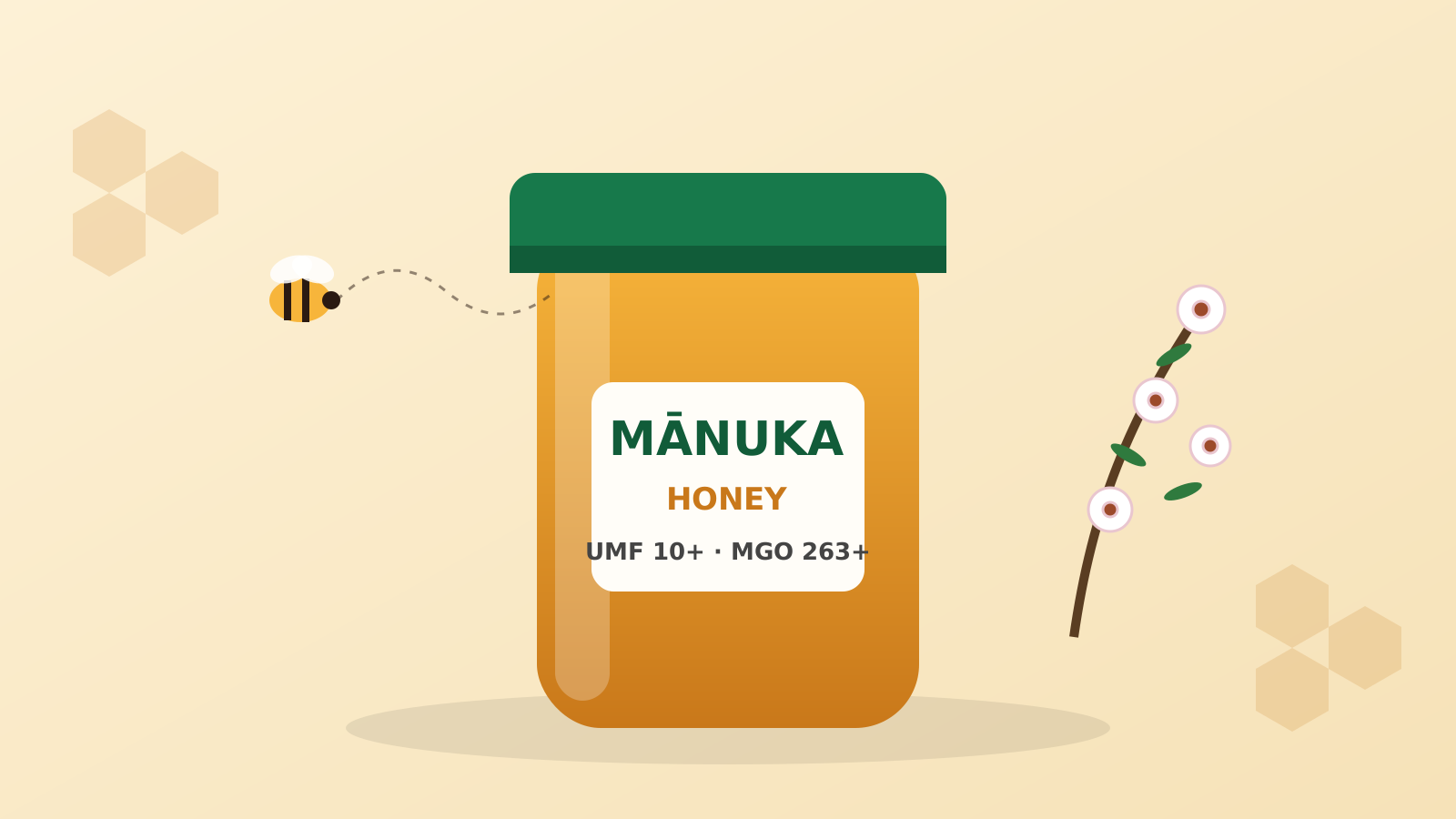
- MGO numbers (for example MGO 263+ or MGO 514+) state the methylglyoxal content in milligrams per kilogram.
- UMF (Unique Mānuka Factor) is a grading system run by the UMF Honey Association. A UMF number (for example UMF 10+ or UMF 15+) also reflects other markers and requires the honey to meet its standards.
As a rough guide, the two scales line up like this:
| UMF | About the same as MGO | Good for |
|---|---|---|
| UMF 5+ | MGO 83+ | Everyday eating |
| UMF 10+ | MGO 263+ | A step up: the most popular grade |
| UMF 15+ | MGO 514+ | A premium jar or a gift |
| UMF 20+ | MGO 829+ | Top grade, priced to match |
Some brands use their own scales or star ratings. If a jar shows neither a UMF nor an MGO number, ask what grade it is.
How to buy a genuine jar
- Look for "Product of New Zealand" and the producer's name.
- Look for a grade: a UMF or MGO number, and "monofloral" or "multifloral".
- Buy local: farmers' markets, beekeepers' shops and good delis in towns across the country sell honey straight from the producer, often with tastings.
- Taking it home? Check your own country's import rules. Many countries allow commercially packed honey; some, such as Australia, restrict bringing honey in. Duty-free stores at the airport sell sealed jars.
How to eat it
Most Kiwis eat mānuka honey the simple way: on toast, stirred into hot (not boiling) lemon water, or by the spoonful. Heat can reduce some of its compounds, so add it to drinks once they have cooled a little.
More New Zealand products
See our guide to Kiwi treats to take home, and the story of Lemon & Paeroa.
This guide is general information, not health advice. Checked in October 2026.