Kiwi slang: 30 words and phrases you'll hear in New Zealand
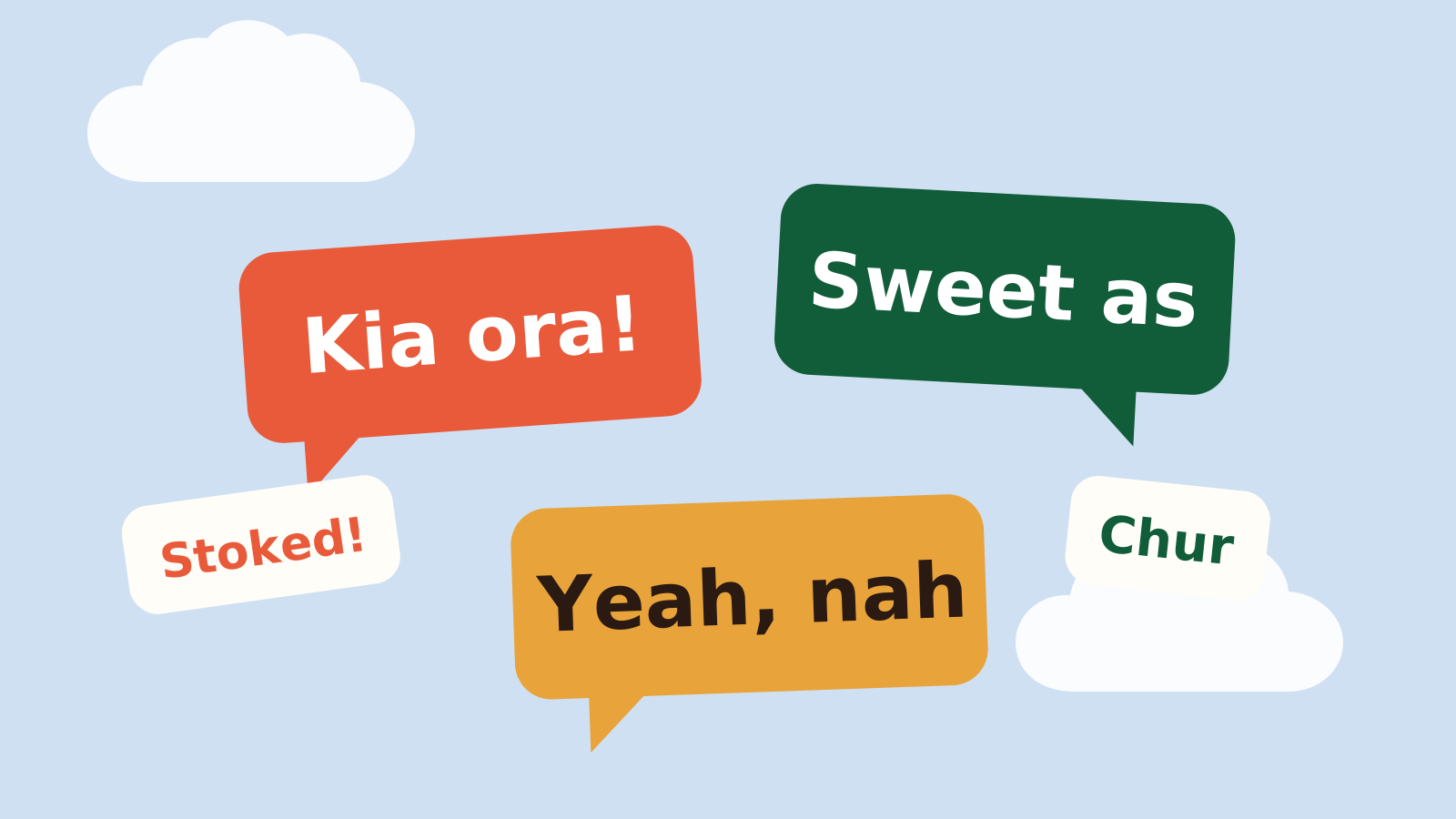
New Zealanders speak English, but not always the English you know. Kiwi English is relaxed, full of shortened words, and mixed with te reo Māori, the Māori language. You'll hear "kia ora" on the radio, "sweet as" at the cafe and "yeah, nah" just about everywhere. Here are the words and phrases you'll meet first, grouped by when you'll hear them.
Greetings and goodbyes
- Kia ora: hello, and also thank you. The most common greeting in the country.
- Kia ora koutou: hello everyone.
- Ka kite (or ka kite anō): see you later.
- Chur: thanks, cheers, nice one.
- Catch ya: goodbye.
- Bro / cuz / mate: friendly ways to address someone.
Agreeing, disagreeing and everything in between
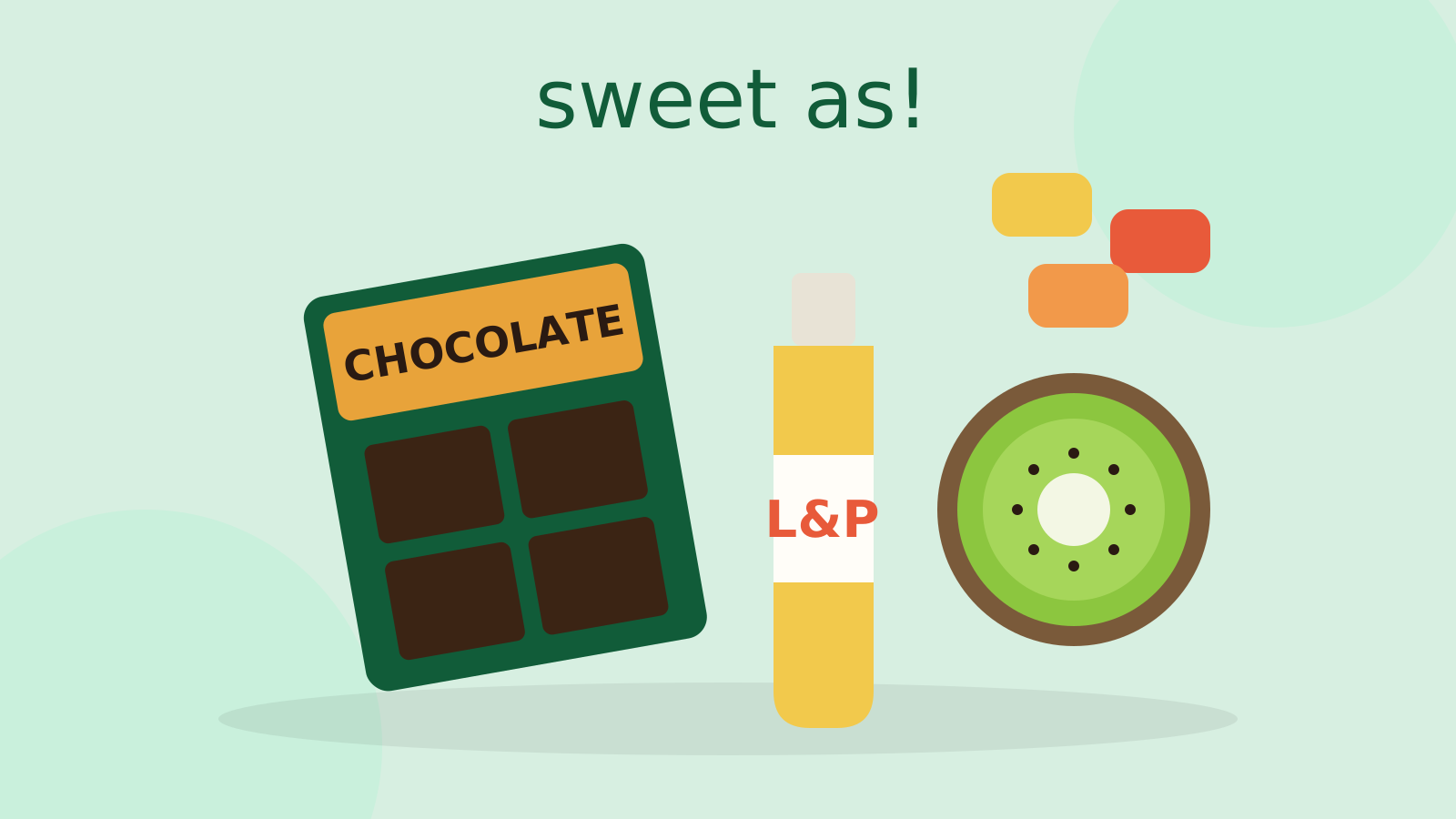
- Sweet as: fine, no problem, great. "Can we pay by card?" "Sweet as."
- Yeah, nah: no, said politely. "Yeah, nah, I'm all good."
- Nah, yeah: yes. Really.
- Choice or tu meke: excellent.
- Stoked: very happy.
- She'll be right: it'll be fine. A national motto, used with confidence and sometimes optimism.
- Eh: added at the end of a sentence to invite agreement. "Hot today, eh."
At the shops and the beach
- Dairy: a corner shop. Good for milk, bread, an ice cream and the newspaper.
- Jandals: flip-flops.
- Togs: swimwear.
- Chilly bin: a cooler box.
- Lollies: sweets.
- Kai: food. "Want to grab some kai?"
- Bach (or crib in the deep south): a holiday home, usually simple and near the water.
In the outdoors
- Tramping: hiking, often for several days with a pack.
- The bush: native forest.
- The wop-wops: the middle of nowhere.
- Gumboots: rubber boots. Taihape has a giant one.
- Whare: a house or building.
At work
- Mahi: work. "Good mahi, team."
- Hui: a meeting.
- Smoko: a tea break.
- Kōrero: a talk or chat.
- Whānau: family, including extended family. Workplaces often talk about "the whānau" to mean the team.
When things go wrong
- Munted: broken.
- Rattle your dags: hurry up.
- Hard out: very, definitely. "It was raining hard out."
Saying Māori words well
Te reo Māori has five vowel sounds, said much like in Spanish or Italian: a (as in "car"), e (as in "egg"), i (as in "eat"), o (as in "or"), u (as in "moon"). A line over a vowel, called a macron (as in Māori, kūmara, whānau), means the vowel is long. "Wh" is usually said like an "f". New Zealanders appreciate visitors who try.
One more word: Kiwi
A kiwi is the bird, and a Kiwi is a New Zealander. The fruit is always a kiwifruit. Call it a kiwi and someone will (kindly) correct you.
For the full A to Z, including more Māori words, see our New Zealand glossary. You might also enjoy New Zealandian and What Is New Zealand Well Known For?